1. DEFINE Statement
The DEFINE statement specifies an alias for a PL/I data type or defines an ordinal data type.
1.1. DEFINE ALIAS Statement
The DEFINE ALIAS statement specifies an alias for PL/I data type.

| Component | Description |
|---|---|
alias-name |
Alias name. |
attributes |
Attributes that can be specified for the data type of the alias. |
The following is an example of using the DEFINE ALIAS statement to define an alias and using it to declare a variable.
  DEFINE ALIAS NAME CHAR(32);
  DECLARE COMPANY_NAME TYPE NAME;
1.2. DEFINE ORDINAL Statement
The DEFINE ORDINAL statement defines an ordinal data type.

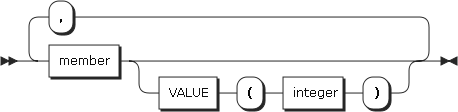
ordinal-value-list:
| Component | Description |
|---|---|
ordinal-name |
Name of the ordinal type. |
member |
Name of a member of the ordinal type. |
VALUE |
Value of a member of the ordinal type.
|
PRECISION |
Precision of VALUE. If PRECISION is omitted, PRECISION is determined by the range of VALUE. |
SIGNED, UNSIGNED |
Specifies VALUE as SIGNED or UNSIGNED. |
The following is an example of using the DEFINE ORDINAL statement to define an ordinal data type and using it to declare a variable.
  DEFINE ORDINAL LANG ( PLI, COBOL, ASSEMBLER, C, CPP );
  DECLARE COMPILER ORDINAL LANG;